

More SIG member profiles will be posted here soon! Thanks to Megan Frary, our Member Profiles Editor, who you can contact at [email protected] to suggest a member to profile or to offer comments/questions. In chronological alphabetical order by last name:

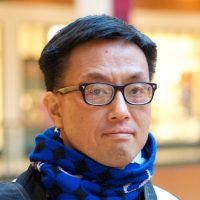
Ken Yasuhara
Director of the Office for the Advancement of Engineering Teaching & Learning at the University of Washington’s Seattle campus.
Your current position:
Officially, I am the director of the Office for the Advancement of Engineering Teaching & Learning (but we just say “ET&L”) at the University of Washington’s Seattle campus. …but that belies the reality that I am one of two educational developers in our office, supported by a graduate student. Small but mighty!
Your discipline/background/expertise:
I now focus on working with engineering educators, but my winding path includes a liberal arts undergraduate education in computer science and education research in engineering.
How did you get to your current position?
I started shifting from doing engineering education research to working with educators back in 2015, eventually taking over the then-one-person ET&L office from my mentor Jim Borgford-Parnell upon his retirement in 2019. (Pretty good timing for an exit, and not just because of COVID. Our building nearly burned down shortly afterward!)
What aspect of your current job do you enjoy the most?
For a small office, we focus a lot on individual consultations. Our faculty members feel lots of pressure to bring in research funding, but many of them are also deeply dedicated to student learning, and they are a delight to work with. I’m a nerd, so it’s also fun to learn bits and pieces of their subject matter along the way.
What topic(s) would you appreciate having collaborators to explore with?
At the moment, I would like to get more conversations going about how genAI might change how we educational developers do our work and how we make more visible the kinds of support we provide that are hard to get from genAI (for the foreseeable future). Yeah, maybe not the most fun topic, but I’m a big believer in turning to face what’s difficult!
What do you like to do outside of work?
I’m really into food and cooking, volunteer with a local Buddhist meditation community, and have become a big enough fan of the soccer kind of football that I help run a supporters group. I’m normally a pretty quiet person, but not during matches!
If you could learn to do anything, what would it be?
So many things…it’s hard to pick! Maybe get better at Polish (my wife’s first language) and Japanese (my parents’ first language).
What is one thing on your bucket list?
Maybe take a multi-day journey by train? Mostly, I just want to be unburdened by regrets when my time comes!
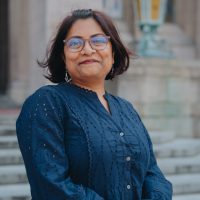
Devshikha Bose
Assistant Director, Office for the Advancement of Engineering Teaching & Learning, College of Engineering, University of Washington, Seattle
Your current position:
Assistant Director, Office for the Advancement of Engineering Teaching & Learning, College of Engineering, University of Washington, Seattle.
Your discipline/background/expertise:
I earned a Ph.D. in Instructional Design and have graduate degrees in English and Secondary Education.
How did you get to your current position?
After gathering 11 years of experience as an educational developer at the Center for Teaching and Learning at Boise State University, I moved on to the University of Washington in 2024 at my current position.
What aspect of your current job do you enjoy the most?
I love talking to students during our mid-quarter feedback gathering sessions to know the strengths of the course and suggestions for improvement. This gives me data that I use to consult with instructor(s) to help them figure out how to enrich their teaching and students’ learning.
What topic(s) would you appreciate having collaborators to explore with?
Mid-quarter feedback/assessments, use of GenAI in course design, impact of GenAI on the future of educational developers (i.e., as a profession).
What do you like to do outside of work?
I love watching TV shows, doing yoga and eating healthy.
If you could learn to do anything, what would it be?
Use the abacus.
What is one thing on your bucket list?
See the northern lights.
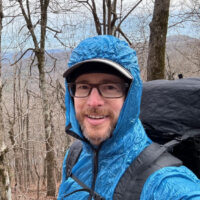
Tris Utschig
Director for Scholarly Teaching in the Center for Excellence in Teaching and Learning (CETL) and a Professor of Nuclear Engineering at Kennesaw State University
Your current position:
I am the Director for Scholarly Teaching in the Center for Excellence in Teaching and Learning (CETL) and a Professor of Nuclear Engineering at Kennesaw State University.
Your discipline/background/expertise:
Nuclear engineering – I earned my PhD from the Fusion Technology Institute at the University of Wisconsin-Madison.
How did you get to your current position?
My story actually begins with the Peace Corps where I spent two years as a teacher in Ghana. This is where I fell in love with teaching – and where I learned that I could study my own teaching, get feedback on it, and then make improvements. After the Peace Corps, I earned my PhD in Nuclear Engineering at the University of Wisconsin. I then spent 6 years in a faculty position at Lewis-Clark State College in northern Idaho. I was the lone engineer in the Division of Natural Sciences where I developed and ran a two-year pre-engineering program which allowed students to earn an associates degree. I started getting involved in program assessment and active learning strategies, which led me to my next position in the CTL at Georgia Tech (8 years) and then in their Office of Assessment (2 years). In 2016, I joined the CETL at Kennesaw State where I also teach one course a year for the Nuclear Engineering minor.
What aspect of your current job do you enjoy the most?
My favorite framework for educational development is process education which is focused on developing capabilities for learning and self-growth. I love mentoring my team for their own self-growth – a process which goes beyond their work in the center.
What topic(s) would you appreciate having collaborators to explore with?
I’m a member of the American Society for Engineering Education (ASEE) teaching excellence task force. We are piloting programs to certify instructors as “registered engineering educators” – and will ultimately need content providers to help train these instructors.
What do you like to do outside of work?
I enjoy spending time with family (we’re empty nesters with two kids), preparing for and competing in American Ninja Warrior-type obstacle courses, and playing guitar with a band. I’ve also begun section hiking the Appalachian Trail.
If you could learn to do anything, what would it be?
Although I currently play the guitar, I’d like to learn to play the drums (how cool is it to play with all four limbs at once?!).
What is one thing on your bucket list?
Besides completing the Appalachian Trail, I’d like to through hike the Continental Divide Trail.

Tonya Whitehead
Associate Director in the Office of Teaching and Learning (OTL) at Wayne State University
Your current position:
I am currently the Associate Director in the Office of Teaching and Learning (OTL) at Wayne State University. We are the pedagogical support for all of campus and also provide training on some Educational Technology. In my position, I oversee the programming we offer, build and maintain relationships with other centers on campus, and manage our Online Course Quality Fellows program.
Outside of my day job, I also hold several volunteer positions: President, Michigan PTA; Secretary, Tau Beta Pi (Engineering Honor Society) DEI Committee; Advisor, TBP MI-D; and Executive Committee Member, Women in Executive Leadership at WSU. The most involved of those is the PTA presidency. At the state level in PTA we oversee all of the local PTAs and hold their 501c3 status. We provide training to leaders, connect them to resources, and advocate on their behalf at the state and federal level. The Board of Directors that I oversee is currently 25 people.
Your discipline/background/expertise:
I hold 3 engineering degrees and a dual business/engineering degree: BS Computer Engineering; MS Manufacturing & Engineering Management, MS & PhD in Biomedical Engineering. My PhD research was in biomaterials for nervous system repair, primarily in the peripheral nerves with a focus on improved quality of life outcomes. Prior to returning to study BME, I worked in a large IT services company supporting enterprise software like SAP and Oracle. If we go back further, it gets even more eclectic.
How did you get to your current position?
I got involved in educational development while I was working on my PhD. I was raised by educators and did some tutoring and mentoring while in high school and undergrad but baulked at the idea of being a teacher myself. When I returned to graduate school after some time in industry, I had a very different perspective than when I was an undergrad. I took advantage of everything that was available to me whenever I could, unlike when I was younger. That may have extended my graduation date, but I think it was worth it. One of those opportunities was a King Chavez Parks Future Faculty Fellowship. During the fellowship I was able to participate in several pedagogical training programs at my institution and others nearby. I was also a Graduate Teaching Assistant (GTA) while working on my PhD which allowed me to see the impacts of some of that training.
As I got further along, having extended my program, funding became more challenging. Fortunately, I had gotten involved with some of the GTA programs at the OTL on campus and their graduate position opened up right when I needed it. I was thankful to be selected based on my other training to be part of the team and have funding while I completed my PhD. That position allowed me to learn more about the field of educational development and find that I really loved it. When I did complete my degree, I was again lucky that the assistant director position was open in the OTL. Leveraging all of the pedagogical training I had completed and previous management experience I was able to transition into the full-time role. A few years later I was promoted to Associate Director.
What aspect of your current job do you enjoy the most?
I think I’m really a lifelong student at heart, so one of my favorite things about this job is learning from each faculty or department I work with. Even though I’m not taking their classes by any means, as we discuss what they hope students will learn and how they structure the course I get to know a bit about topics I might not otherwise engage with. I have a whole list of courses I will audit some day when I have time!
What topic(s) would you appreciate having collaborators to explore with?
At the moment how AI is changing the engineering field is top of mind.
In the past, I’ve done some work looking at how pedagogical strategies benefit underrepresented groups in engineering and would be interested in digging into that again.
What do you like to do outside of work?
My biggest activity outside of work is volunteering. But I also enjoy camping and doing things with my three rescue dogs.
If you could learn to do anything, what would it be?
I mentioned before… basically everything! But, if I had to pick one thing, I would spend more time learning to draw or paint. I loved art class as a child and frequent paint and pour now, but I’d love to get formal training to really hone my skills. My grandmother and great aunt are amazing artists and I imagine that is what my retirement activity will be.
What is one thing on your bucket list?
I really want to travel to Australia, Africa, and the Galapagos Islands. I’m setting money aside now to do one for my next big birthday.
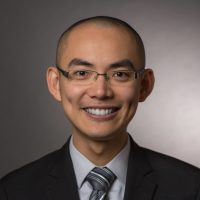
John Foo
Senior Assistant Director, Science and Engineering in the Center for Teaching and Learning at Columbia University
Your discipline/background/expertise:
Biomedical Engineering and Educational Development
How did you get to your current position?
My first foray in educational development was as a Graduate Student Fellow at Cornell University’s Center for Teaching Excellence (CTE). Under the guidance and mentorship of the CTE staff, I developed pedagogical workshops for my peers and engaged in a couple of teaching-as-research projects, all of which I enjoyed immensely. In 2013, with support from the POD GPPD Career Development Grant, I had the privilege of attending my first POD conference. That experience solidified my decision to pursue educational development as a career.
What aspect of your current job do you enjoy the most?
I really enjoy working with faculty across semesters as they continually innovate in their teaching practices and iterate on different aspects of their courses to help their students learn better. I find it inspiring to witness the passion of these faculty instructors and the evolution of their teaching practice and courses.
What topic(s) would you appreciate having collaborators to explore with?
What are the most effective ways for an educational developer to inspire and encourage faculty to incorporate more opportunities for students to engage in inquiry or research, particularly in introductory STEM courses with large class sizes? Once faculty are on board, what are the most effective ways for an educational developer to support them as they design, implement, and sustain these opportunities over the long term?
What do you like to do outside of work?
I enjoy birding, karaoke, and horror movies.
If you could learn to do anything, what would it be?
Play the piano.
What is one thing on your bucket list?
I’m not sure if this qualifies as a bucket list item as it’s not something I intend to check off, but I enjoy traveling to visit friends where they live and experiencing some of their favorite places together, e.g., cafes, restaurants, parks, and walking trails.
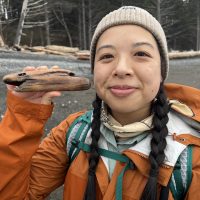
Karena Nguyen
Assistant Director of Postdoctoral Services, Georgia Tech
Your discipline/background/expertise:
I received my Ph.D. in integrative biology from the University of South Florida and a bachelor’s of science in ecology and evolution from Saint Louis University
How did you get to your current position?
After completing my postdoctoral fellowship with the Fellowships in Research and Science Teaching (FIRST) program at Emory University, I decided to pivot away from research and into academic administration. My pedagogical training, leadership with Emory’s Postdoctoral Association, and desire to improve the postdoc ecosystem supported my transition into career and professional development for postdocs.
What aspect of your current job do you enjoy the most?
I view my role as a community builder for postdocs while they are at Georgia Tech, and a bridge for them to chart their own path to the next position. I enjoy moments where postdocs identify a skill, value, or interest they were not aware of before, and add that knowledge to their decision-making process.
What topic(s) would you appreciate having collaborators to explore with?
What career and professional development for postdocs looks like will continue to evolve, and I love hearing how others are tackling needs they see on their own campuses.
What is your current role in the STEM SIG and what does that entail?
I am currently a volunteer with the STEM SIG and enjoy contributing to events that encourage educational developers to incorporate DEI into how we interact with or train individuals in STEM fields at our own institutions. This past year, I worked with members to facilitate two workshops centered on racial awareness and healing within educational development.
What do you like to do outside of work?
I enjoy weightlifting and running, primarily reading fantasy books (with the occasional popular science and science fiction), cooking, and playing with my dog.
If you could learn to do anything, what would it be?
If I didn’t get seasick, I would love to learn how to sail a boat. Alternatively, how to manage a bookstore!
What is one thing on your bucket list?
I would like to make it to all 63 U.S. National Parks (so far, I’ve only gone to four!).
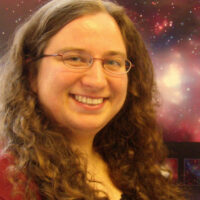
Carie Cardamone
Associate Director for STEM & Professional Schools in the Center for the Enhancement of Learning and Teaching at Tufts University
How long have you been a member of POD?
Since 2011.
Your discipline/background/expertise:
Astronomy, Physics Education Research, Citizen Science & Professional Development
How did you get to your current position?
In graduate school, I took a class from Yale’s Graduate Teaching Center. I had so much fun, I became a fellow at the GTC for the rest of my time working on my PhD. Once I graduated I ended up in a postdoc in Physics Education Research at MIT. I loved teaching but missed some of my astronomy research, so over time I’ve moved from positions in teaching and learning centers to a faculty role at a small liberal arts college. Eventually, I ended up in my current role at Tufts’ Center for the Enhancement of Learning & Teaching.
What aspect of your current job do you enjoy the most?
I love that as a faculty developer we are always learning. I spent several years focused on learning more about assessments, and these past 2 years I’ve been diving deep into AI. Our work is always changing as we collaborate with different faculty members and departments. I also appreciate that in my current role I get to publish, sometimes collaborating with faculty on studying their teaching and sometimes with other faculty developers. Most of all I love working with the people – we get to meet fascinating instructors who are passionate about what they teach and supporting the students they work with.
What topic(s) would you appreciate having collaborators to explore with?
Right now I’ve been thinking about the impacts of generative AI on higher education. I’m interested in exploring both how it can help create creative new ways for us to teach and to learn, and also in how we might reimagine what we do in higher education in response to it. One thing I’m excited about now is thinking through how we can use the existence of AI to recenter human connections at the heart of teaching & learning, and foster uniquely human capacities.
What do you like to do outside of work?
I have a tiny 5lb puppy, whom I love to take on walks. I’ve also recently rediscovered horseback riding!
If you could learn to do anything, what would it be?
I love learning new things, so I don’t think I could answer this with just one thing!
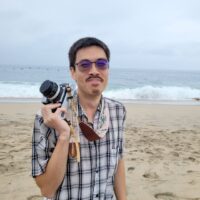
Matthew Mahavongtrakul
Program Director of Educational Development at the Division of Teaching Excellence and Innovation and Lecturer in the Department of Molecular Biology and Biochemistry at UC Irvine
How long have you been a member of POD?
Since 2018.
Your discipline/background/expertise:
My degree is in neurobiology and my research was in Alzheimer’s disease and learning and memory. Currently I do faculty development.
How did you get to your current position?
In year 2 of my PhD, I was accepted into the Pedagogical Fellows Program at UC Irvine (for graduate students interested in teaching) and learned a lot about pedagogy. From there, I continued to advocate for myself in order to continue working in this space. I spent some time as an Instructional Development Associate while I was still a graduate student before doing two postdocs and spending an additional year as a STEM specialist in the Division of Teaching Excellence and Innovation at UCI. Just recently I moved into a permanent position in the division.
What aspect of your current job do you enjoy the most?
I love mentoring and am always looking for opportunities to do this. Through the Active Learning Institute, I get to mentor faculty on using best practices in the classroom. I’m also mentoring two people who are newer to educational development work and enjoy getting to help them explore that space and what it looks like at UC Irvine. I also really enjoy helping people to think critically about ideas that others tend to take as given or as best practice.
What topic(s) would you appreciate having collaborators to explore with?
I would like to explore creating an advanced Active Learning Institute for faculty who want to learn more than the basics in active learning and who are ready for the next step (e.g., curricular and structural change, rethinking grading practices, etc.). Additionally, I’m interested in how different institutions are incentivizing professional development for faculty members.
What do you like to do outside of work?
- Gardening
- Reading (my favorite genres are fantasy and historical fiction)
- Playing games (favorites include Bioshock Infinite and The Last of Us)
- Exercising and hiking
- Film photography
- Spending time with my family
- Playing music (I play over 30 instruments, many of which are Thai instruments, as well as the piano, violin, and guitar)
If you could learn to do anything, what would it be?
Unrealistically, I wish I could teleport (to eliminate the commute in SoCal). Realistically though, I would like to learn to code.
What is one thing on your bucket list?
Visit all of the national parks at different times of the day to take film photos and capture how the landscapes change throughout the day and night – I love astrophotography!
What else should we know about you?
I really value informal conversations where I can get to know people as people and not just learn about them through their work.
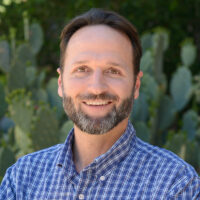
Josh Caulkins
Director of the Center for Teaching and Learning Excellence at Embry-Riddle Aeronautical University in Prescott, Arizona
How long have you been a member of POD?
Since 2015.
Your discipline/background/expertise:
Earth science, geoscience, and (more recently) educational development
How did you get to your current position?
After graduate school, I was hired as a Science Teaching and Learning Fellow at the University of British Columbia as part of the Carl Wieman Science Education Initiative where I worked with dozens of faculty on their courses. This started me down a path of STEM-focused faculty development positions. After spending time at the University of Rhode Island and Arizona State University, I came to Embry-Riddle in Prescott, AZ in 2021 to serve as the director of the center here.
What aspect of your current job do you enjoy the most?
I am excited about the potential for moving the needle on how universities approach teaching and learning. All of our work is an attempt to shift how we view ourselves as teachers (and learners) as well as to shift how our institutions envision what “good teaching” looks like and what it would mean for our students and faculty when we learn more about how to be “good teachers.” A big part of this is promoting the adoption of more inclusive and equitable teaching practices, and increasing the visibility of those practices. I’m trying to politely (or not-so-politely) disrupt higher education, at least at my institution!
What topic(s) would you appreciate having collaborators to explore with?
Anything! I don’t like working in isolation, which happened when I first arrived at ERAU as a center-of-one during COVID. I enjoy having others to share ideas with to make sure we are best serving the needs of our faculty and students. As it relates to the STEM SIG, I am very interested in equity and inclusion at the course and institutional levels; we’re making progress but still aren’t doing a good enough job, in my opinion. I’d also like to see more collaboration across disciplines inside and outside of STEM on this topic.
What do you like to do outside of work?
I live in northern AZ and have a pair of “rescue” mini-donkeys, Kiko and Dusty. I like to build things and have built several fences and small-but-strong hutch for the donkeys. I also like to go on walks with my spouse, kids, and dogs. I like to explore new places in the world; one of my favorite places was visiting Lake Balaton in Hungary for a total solar eclipse many years ago.
If you could learn to do anything, what would it be?
I would like to know multiple languages so that I could read Russian, German, French, and Mandarin (to name a few).
What is one thing on your bucket list?
Someday I would love to go to northern Scotland and visit the many islands there.

Rachel Horak
Senior Education Specialist at the American Society for Microbiology (ASM)
How long have you been a member of POD?
Since 2019
Your discipline/background/expertise:
Biology and oceanography
How did you get to your current position?
After graduate school, I did an oceanography research-related postdoc and a STEM education-related postdoc. After taking some time off for family, I was interested in a position related to education but realized that a faculty role wasn’t a good fit with young kids at home. I found this position which allows me to work remotely with biology educators around the world.
What aspect of your current job do you enjoy the most?
I most enjoy when I can have one-on-one interactions with microbiology educators. My position isn’t focused on these kinds of interactions, but I really enjoy the opportunities I get to build relationships with educators and support them in designing good courses.
What topic(s) would you appreciate having collaborators to explore with?
I’m currently running for a position on our local school committee due in part to my background in education. I would like to think about how we, as educational developers, can use our expertise to make a difference in our communities (e.g., through public service or as advisors to public bodies).
What do you like to do outside of work?
I recently got certified as a yoga teacher, so I do a lot of yoga. I also swim competitively, enjoy knitting, and have 5 backyard chickens!
If you could learn to do anything, what would it be?
I would like to improve my public speaking skills.
What is one thing on your bucket list?
I would love to take a long vacation with my spouse somewhere sunny!
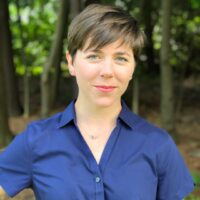
Lynn Mandeltort
Assistant Director, Center for Teaching Excellence, University of Virginia
How long have you been a member of POD?
Since 2014
Your discipline/background/expertise:
Physical Chemistry
How did you get to your current position?
In grad school I loved the overlap of working with my hands and my mind, and found a delectable and fun challenge in describing my niche work to different audiences. I got curious about teaching as well as the development of teachers—I started reading and saw all these ways of being a more effective communicator and educator. The rich literature foundation for effective teaching was a total revelation for me, and I found a way to focus on that after graduation (this was around the time that active learning was a buzzword and the Freeman PNAS paper was published, and I was completely on board). My first job out of graduate school was a postdoctoral position focused on redeveloping a first year chemistry curriculum, especially laboratories. After that I was a lecturer for large enrollment general chemistry courses at a large public university, and then I taught at a small liberal arts college for several years where I got to teach across the chemistry curriculum and also dabbled in educational development. Those contingent positions were precarious, and I was able to carve out enough educational development experience with the goal of landing a job like the one I have now.
What aspect of your current job do you enjoy the most?
Because there are many ways to teach well, there are also many ways to help people teach well, and I enjoy situations where there are multiple approaches to similar outcomes. I love that we have ways to support instructors within their individual contexts—short term or long term, individually or in groups and cohorts, topical or general. I especially enjoy working with a competent and supportive team in my current job.
What topic(s) would you appreciate having collaborators to explore with?
I’ve been lucky that collaborators are abundant within POD! I presently work with a group trying to reimagine how our one-on-one consultation approaches can be more justice-forward and that group is always welcoming feedback and new perspectives. I’m also interested in team teaching.
What do you like to do outside of work?
I play ultimate frisbee and try to get outside as much as possible. My dog gets a lot of walks. I also enjoy watching and being impressed by people who are good at what they do, no matter how normal or obscure the task (line cooks, people speaking in public, plumbers, skate boarders, my colleagues, hair stylists, etc.—just anyone really doing “their” thing or in a state of flow).
If you could learn to do anything, what would it be?
How to dance to all kinds of music. I love listening to music and moving my body but somehow the connection between those two continues to exist at my learning edge!
What is one thing on your bucket list?
To visit some glaciers before they disappear.
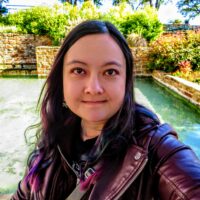
Christine O’Donnell
Education & Diversity Program Manager at the American Physical Society
How long have you been a member of POD?
Since 2019
Your discipline/background/expertise:
Astrophysics
How did you get to your current position?
I currently work as an Education & Diversity Program Manager at the American Physical Society (APS), the largest professional society for physicists. While I enjoyed doing research, I was not motivated to continue on an academic career pathway by becoming a professor. Instead, I wanted to be in a position where I could lead and/or support larger-scale transformations of STEM education. That’s actually how I got involved in POD and the STEM SIG – one of the options I was considering was a career in a university-level center for teaching and learning so that I could work with many faculty across multiple departments. A couple colleagues forwarded me the job ad for my current position APS, and I realized that it fulfilled what I was looking for, but at an even larger nation-wide scale.
What aspect of your current job do you enjoy the most?
I really appreciate being able to support initiatives that will improve student experiences across the country. I also get to work with awesome people, both at APS and externally – we work with so many amazing experts and motivated individuals in physics departments (and beyond!).
What topic(s) would you appreciate having collaborators to explore with?
While my work is largely focused on physics, a lot of what we do is not unique to physics. For example, I work on the Effective Practices for Physics Programs (EP3) Initiative, which has developed a comprehensive guide to support departmental and cultural changes, such as improving recruiting and retention of students; equity, diversity, and inclusion; and departmental processes such as program reviews and strategic planning. While this Guide was developed for physics departments in particular, much of our findings likely apply to other fields. For example, we’ve held workshops with humanities faculty about increasing enrollment using the EP3 Guide. We’re currently gearing up towards our next grant proposal, and I’d love to find collaborators who want to test (and thus improve and strengthen) our resources by working with faculty in multiple departments!
What do you like to do outside of work?
I currently volunteer at the Phoenix Zoo as an Engagement Volunteer, which means I’m one of the people walking around the Zoo who will answer questions, point out animals in our exhibits, and offer fun and important facts about the animals and conservation. I also enjoy maker/crafter hobbies, including glass blowing/lampworking, beading, chainmaille, and crochet/knitting. And I have two black cats who both love having lots of attention focused on them, which often interferes with being able to make/craft anything!
If you could learn to do anything, what would it be?
I’ve always wanted to learn to play an instrument. But something that’s more likely to happen is learning to weld – I would love to add metalworking to my list of skills! And for something that’s far less likely, I’d love to learn to fly, maybe as a pilot or with wingsuit flying.
What is one thing on your bucket list?
Bungee jumping, ideally in New Zealand because I really want to go back to New Zealand!

Ken Griffith
Director – STEM Teaching, Engagement and Pedagogy (STEP) Program at the Teaching, Learning & Professional Development Center (TLPDC) at Texas Tech University
Your discipline/background/expertise:
Biology
How did you get to your current position?
I was heavily engaged with the TLPDC as a part of my Howard Hughes Medical Institute Graduate fellowship. Upon completion of that fellowship, I was asked by the TLPDC Executive Director, Suzanne Tapp, if I would be interested in working in the TLPDC part time, as a Graduate Peer Consultant. Four years ago, while looking for a post-doctoral fellowship, Suzanne asked if I would be interested in leading a new STEM faculty development initiative. I enthusiastically accepted the challenge and STEP was born!
What aspect of your current job do you enjoy the most?
Working with faculty. I really enjoy getting to know them and hearing about their experiences on campus.
What topic(s) would you appreciate having collaborators to explore with?
Although the STEP Program is a pure faculty development cohort-style program, we are also heavily engaged with faculty in Discipline-based Education Research (DBER). We are also collaborators on several proposals for extramural funding. We are always looking to collaborate with other centers in our region and across the country.
What do you like to do outside of work?
Cycling. I’m a total cycling fanatic. I ride, I race, I build bikes, I watch professional cycling. My wife has even started watching races with me.
What is your hidden talent?
Talent might be a stretch, but I play several musical instruments.
What is one thing on your bucket list?
You might not be surprised to see that this one is cycling related. Someday, I’d love to be on the side of the road during the Tour de France, Giro d’ Italia, Vuelta a España or Paris-Roubaix.
Tell us something that might surprise us about you…
I started off as a music major!!!

Elizabeth Harris
Director, Collaborative for Engineering Education and Teaching Effectiveness (CEETE) at The University of Wisconsin – Madison
Your discipline/background/expertise:
Cognitive Engineering
How did you get to your current position?
The path to my current position was winding. I pursued early interests in design and technology, which led to behavioral neuroscience and systems engineering as ways to understand how we learn and what environments are needed for effective learning and change. I took my current position because it allows me to use my accumulated skills and experiences to make an impact on things I feel matter such as supporting and improving the quality of education students receive, and the environments that support them in reaching their personal and professional goals.
What aspect of your current job do you enjoy the most?
Collaborating with diverse groups of people to facilitate change and foster inclusive environments that support students, faculty, staff, grad students, and the community in successfully achieving their goals. aka – I love supporting people as they strive to achieve their dreams.
What topic(s) would you appreciate having collaborators to explore with?
Everything! We are currently working on revamping our TA training, and inclusive teaching training.
What do you like to do outside of work?
Hike, paddle, be outside, play with my dog, explore the world, learn new things, spend time with friends and family, make terrible art… the list goes on!
If you could learn to do anything, what would it be?
I love learning new things. Right now I’m learning to paint, and want to learn how to do art welding.
What is one thing on your bucket list?
To visit all 7 continents.
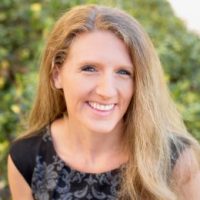
Jenn Weaver
Lecturer and Associate Director for University Teaching at the California Institute of Technology
Your discipline/background/expertise:
Discipline and background: PhD in ecological modelling (CS meets ecology meets statistics), many years as the instructor of undergraduate physical geography and biology courses,
Expertise: STEM classrooms, inclusive classrooms, active learning, student engagement, faculty development, graduate student development
How did you get to your current position?
Serendipitously. I was a sessional lecturer during and after my doctoral program and knew that teaching had to be a part of my career. While I was a post-doc with Berkeley’s Initiative in Global Change Biology, I discovered the magic of pedagogy and working at a Center for Teaching and Learning. I joined Caltech’s CTLO in 2015.
What aspect of your current job do you enjoy the most?
That moment when faculty or grad students realize how they can engage in active learning with their students, and that they CAN do it. And then when they come back and tell me about it with a huge smile on their face, I’m really proud of them. It’s a small thing, but I think it can make a world of difference in students’ experiences in their classes…… Oh, and teaching my grad class – they’re literally the best and I tremendously admire their ability to be amazing researchers AND teachers.
What topic(s) would you appreciate having collaborators to explore with?
All the things! Effectiveness of pedagogy courses, engaging STEM faculty, inclusive classrooms, faculty with disabilities, program and curriculum assessment, organizational change…
What do you like to do outside of work?
Hiking mountains, running on the beach, Zumba, rock climbing, convincing hiking partners that a vertical outwash really is a trail that we should go on…..
If you could learn to do anything, what would it be?
Sit still.
What is your hidden talent?
I’m a Zumba instructor. Not a hidden talent per se, but an unexpected tidbit of information…
What is one thing on your bucket list?
Visit the Galapagos! An ecologist’s dream.