

The Christine A. Stanley Award for Diversity and Inclusion Research in Educational Development honors the work of Dr. Christine A. Stanley by celebrating educational development scholars who advance diversity and inclusion through their research and publications.
About Dr. Christine Stanley
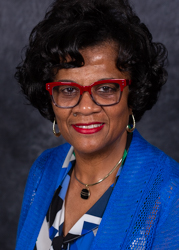
“This award is designed for individuals who do the work of educational development, broadly construed. For example, those who are scholar-practitioners, those doing faculty development in their various units, those working to change teaching, learning, and research to make it more inclusive—through this award, I want them to see that their work has value.”—Dr. Christine Stanley
Dr. Christine A. Stanley is a distinguished Regents Professor and leader in higher education. As a former POD Network President (2000–2001), Chair of the Diversity, Equity and Inclusion Committee (1993–1999), and author of numerous publications, Dr. Stanley has, through her extensive scholarship and administrative roles, significantly advanced the field of educational development with a particular focus on diversity and inclusion.
Purpose
Established in 2016, the Stanley Award serves three key purposes:
- To advance educational development scholarship on diversity- and inclusion-related issues in the field.
- To reflect POD’s values of diverse perspectives and reflection by recognizing scholarly engagement with diversity and inclusion in the field of educational development.
- To highlight the work and thought-leadership of educational development scholar-practitioners and researchers engaging meaningfully with issues of diversity and inclusion.
Sponsored by the POD Diversity Committee, the Awards Committee, and the Journal of Diversity and Equity in Educational Development (JDEED).
All applications are welcome; however, all awarded authors must become POD Network members upon receiving the Stanley Award, if not members upon application.
To be eligible, manuscripts must have been formally accepted by or published in a peer-reviewed platform within the 18 months prior to the Stanley Award deadline.
The manuscript must:
- Demonstrate an awareness of both educational development scholarship and relevant scholarship on diversity and inclusion;
- Reflect relevant POD Vision, Mission and Values;
- Articulate a central argument about diversity and inclusion through educational development (whether that be among faculty, students, or educational developers); and
- Reflect original empirical research OR a substantial theoretical reconceptualization of key ideas in the field OR novel evidence-based practices. Research submissions may employ quantitative, qualitative, or mixed methods, and should be based on established methodologies aligned with the paper’s central question(s). Theoretical submissions should offer a strong connection to existing educational development scholarship and articulate the boundaries of the theory, or the limits of and contexts for its applicability. Practice-focused submissions must meaningfully engage with educational development scholarship as a context for the practice and also provide evidence of the practice’s efficacy.
All manuscripts on educational development that have been formally accepted by or published in a peer-reviewed platform between September 1, 2024 and March 1, 2026 are eligible for consideration.
A completed submission includes:
- A complete, article-length manuscript
- An author information form
- A short (150–200 word) application statement articulating the ways in which your manuscript exemplifies the purpose and aims of this award.
Please anonymize your submission by removing any direct references to you, your co-authors, institution, and supporting publications. Be sure to anonymize all parts of your proposal, including appendices. Publications should be up to 35 pages (exclusive of references or appendices), double-spaced, and written in English.
Submissions may be made via the application form. Submissions will be reviewed and scored by the Stanley Award selection committee.
Please note that book-length manuscripts are not currently eligible.
The Stanley Award recipient(s) will be invited to share insights about their writing process and/or publication via participation in a virtual scholarly engagement event with the Journal of Diversity and Equity in Educational Development (JDEED) (e.g., be a featured guest at a virtual Meet the Scholar event). In addition, the awardee(s) will be featured at a DEIC-hosted conference session, and will be recognized at the POD Network Annual Conference Awards Banquet.
One awardee will receive a conference registration fee waiver for the annual conference in which they participate in a conference session hosted by the DEI Committee.
The Christine A. Stanley Award for Diversity and Inclusion Research in Educational Development selection committee will comprise three to five members of the POD Network, pending availability. Potential members include: one member of the Executive Committee, a member of the POD Diversity Committee, one past Stanley awardee, a member of the Journal of Diversity and Equity in Educational Development team who does not hold editorial responsibilities, and a representative from the Grants and Fellowships Committee.
Should you have any questions, please contact [email protected].
Award Recipients
2022
Chayla Haynes Davison
Haynes, C. (2023). The susceptibility of teaching to White interests: A theoretical explanation of the influence of racial consciousness on the behaviors of White faculty in the classroom. Journal of Diversity in Higher Education, 16(1), 97–108
2019
Kayon Murray-Johnson and Jovita M. Ross-Gordon
Murray-Johnson, K., & Ross-Gordon, J. M. (2018).“Everything is about Balance”: Graduate Education Faculty and the Navigation of Difficult Discourses on Race. Adult Education Quarterly, 68(2), 137-156.
2018
Jamie Gomez and Vanessa Svihla
Gomez, J., & Svihla, V. (2018). Rurality as an Asset for Inclusive Teaching in Chemical Engineering. Chemical Engineering Education, 52(2), 99–106.
2017
Lindsay Bernhagen & Emily Gravett
Bernhagen, L. and Gravett, E. (2017). Educational Development as Pink Collar Labor: Implications and Recommendations. To Improve the Academy, 36(1), 9–19.
Nanda Dimitrov & Aisha Haque
Dimitrov, N. & Haque, A. (2016). Intercultural Teaching Competence in the Disciplines. In Pérez, G. M. G. & Rojas-Primus, C. (Eds.) Promoting Intercultural Communication Competencies in Higher Education. (pp. 89–119). IGI Global: Hershey, PA.